
The Intersectoral Group held its 13th working session, marking an important milestone in a process that, for more than a year, has brought together various institutions around the prevention and investigation of homicides and suspicious deaths of children and adolescents.
The meeting aimed to close the diagnostic phase and move decisively toward the development of concrete, relevant, and feasible solutions.
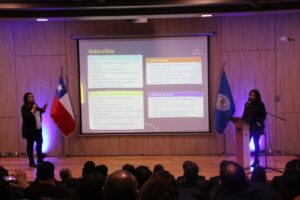
During the session, the focus was on collectively reviewing and adjusting the diagram that summarizes the Group’s work plan, incorporating the lessons learned and the agreements reached throughout the process. In addition, a participatory exercise was carried out to determine which initiatives should be prioritized, considering both their urgency and feasibility of implementation.
At the start of the session, the Executive Vice President of Fundación Amparo y Justicia, Ena von Baer, highlighted the sustained commitment of the institutions that have taken part in the process for more than a year, emphasizing that “this is not just another session, but in many ways the closing of a stage.” In this context, she noted that the agreed-upon diagnosis now makes it possible to move toward “solutions that are not only feasible, but also relevant,” built through interinstitutional, evidence-based work.
For her part, the Undersecretary for Children, Verónica Silva, emphasized the risks of a fragmented institutional response to cases of child homicide. Drawing on her experience, she warned that “there is no possibility of prevention or timely action if there is no joint work,” stressing the need for effective coordination among the different institutions involved.
Throughout the day, participants reviewed the proposed initiatives, analyzed their scope, and assessed their impact. This work made it possible to identify priority actions, with potential for implementation in the short and medium term, while maintaining a long-term systemic perspective.