Against Children
In 2007, after learning about the experience of a girl who was interviewed more than seven times by different investigators, we began advocating for changes to ensure that institutions within the justice system provided better treatment to victims. After more than 10 years of work, we secured the enactment of the Law on Videotaped Interviews, which prevents secondary victimization.
Today we continue working to ensure its proper implementation through training for justice system personnel, awareness campaigns, and the provision of access to figures and statistics that help highlight the magnitude of the problem, evaluate its implementation, and guide decision-making.
Amparo y Justicia


2007
1. Identification and definition of the problem
1. Identification and definition of the problem
In 2007, the Fundación Amparo y Justicia expanded its mission and set out to address the secondary victimization suffered by children who are victims of sexual crimes during their journey through the criminal justice system. This initiative arose after learning about the case of a girl in Concepción who had to recount what had happened to her multiple times to different people. The Foundation conducted studies to characterize the problem and also convened an inter-institutional working group to address the situation faced by children who are victims of sexual crimes in a coordinated manner as they pass through the criminal justice system.
2008–2012
2. Development of Alternatives
2. Development of Alternatives
Following a series of meetings with key stakeholders and the organization of numerous seminars with international experts, in October 2012 the Foundation submitted a proposal to the Ministry of the Interior and Public Security aimed at regulating the collection of statements from children who are victims of sexual crimes. This document served as the basis for the bill establishing video-recorded interviews, which the Executive Branch submitted to Congress in January 2014. At the same time, in 2013, the “Don’t Ask Me Anymore” campaign was launched on social media, initially aimed at gathering signatures in order to change the way these testimonies were obtained.
2014–2018
3. Adoption of the Policy
3. Adoption of the Policy
Following a lengthy parliamentary debate between 2014 and 2017, this bill ultimately became Law 21,057 on Video-Recorded Interviews, enacted in January 2018. During the years that the bill was under discussion, various representatives from public institutions, academia, and civil society organizations participated. In turn, in 2016, Amparo y Justicia launched a book on video-recorded investigative interviews, and that same year, the “Don’t Ask Me Anymore” campaign expanded to public transportation, movie theaters, and billboards.
2019–2022
4. Implementation
4. Implementation
Given the wide-ranging implications of this public policy, its implementation was carried out gradually to ensure that each of Chile’s 16 regions had access to specialized professionals and the necessary infrastructure. This process unfolded in three stages, from October 2019 to October 2022. During this phase, Amparo y Justicia played a key role in facilitating the training of those who would serve as interviewers and instructors. Faced with the challenge of the pandemic, the Foundation adapted the training processes to an online format, ensuring the quality of learning.
2024–2025
5. Monitoring and Evaluation
5. Monitoring and Evaluation
Between 2024 and 2025, in collaboration with Fundación Paz Ciudadana, an impact assessment of the implementation of video-recorded interviews was conducted. The results demonstrated that this technique not only improves the quality of evidence but also significantly increases judicial outcomes: it raises the likelihood of formal charges by up to 28%, the likelihood of obtaining a verdict by up to 56%, and the likelihood of securing a conviction by more than 32%. These findings support the effectiveness of the public policy and demonstrate how the adoption of specialized methodologies contributes to a more efficient and protective response to crimes against children.
Impact Assessment: Video-Recorded Investigative Interview
In order to measure the effectiveness of the public policy, an impact assessment was conducted in collaboration with Fundación Paz Ciudadana.
The results show that, compared to traditional methods, this technique increases the likelihood of cases being formally filed by up to 28%, of reaching a verdict by 56%, and of resulting in a conviction by 32%.
Systematization of the Fundación Amparo y Justicia Model for Public Policy Advocacy
Through this study, the Foundation sought to systematize its experience in preventing secondary victimization of children who are victims of sexual crimes—identifying the main actions, insights gained, and challenges in its public policy advocacy efforts.
Access reports, books, news articles and more, all in one single place.
Estudio “Niños, niñas y adolescentes víctimas de delitos sexuales: ingreso de denuncias y respuestas del sistema de justicia penal”
Desde 2019, Fundación Amparo y Justicia elabora anualmente el estudio estadístico “Niños, niñas y adolescentes víctimas de delitos sexuales: ingreso de denuncias y respuestas del+
Impact evaluation of Videotaped Investigative Interview
For almost two decades, Fundación Amparo y Justicia has worked to improve the taking of statements from children and adolescents victims of sexual crimes, seeking+
Estimación del crecimiento de denuncias de delitos sexuales contra niños, niñas y adolescentes: Desarrollo de un modelo predictivo
En Chile, las denuncias por delitos sexuales contra niños, niñas y adolescentes han aumentado sostenidamente en los últimos años, alcanzando los 40.000 casos en 2022.+
Study by Fundación Amparo y Justicia: Children and adolescents victims of sexual crimes – Reporting of complaints and responses of the criminal justice system
Estudio “Niños, niñas y adolescentes víctimas de delitos sexuales: ingreso de denuncias y respuestas del sistema de justicia penal”
Desde 2019, Fundación Amparo y Justicia elabora anualmente el estudio estadístico “Niños, niñas y adolescentes víctimas de delitos sexuales: ingreso de denuncias y respuestas del+
Impact evaluation of Videotaped Investigative Interview
For almost two decades, Fundación Amparo y Justicia has worked to improve the taking of statements from children and adolescents victims of sexual crimes, seeking+
Estimación del crecimiento de denuncias de delitos sexuales contra niños, niñas y adolescentes: Desarrollo de un modelo predictivo
En Chile, las denuncias por delitos sexuales contra niños, niñas y adolescentes han aumentado sostenidamente en los últimos años, alcanzando los 40.000 casos en 2022.+
Study by Fundación Amparo y Justicia: Children and adolescents victims of sexual crimes – Reporting of complaints and responses of the criminal justice system

Continuous Learning Platform for operators of Law 21,057 regarding Videotaped Interviews.

News
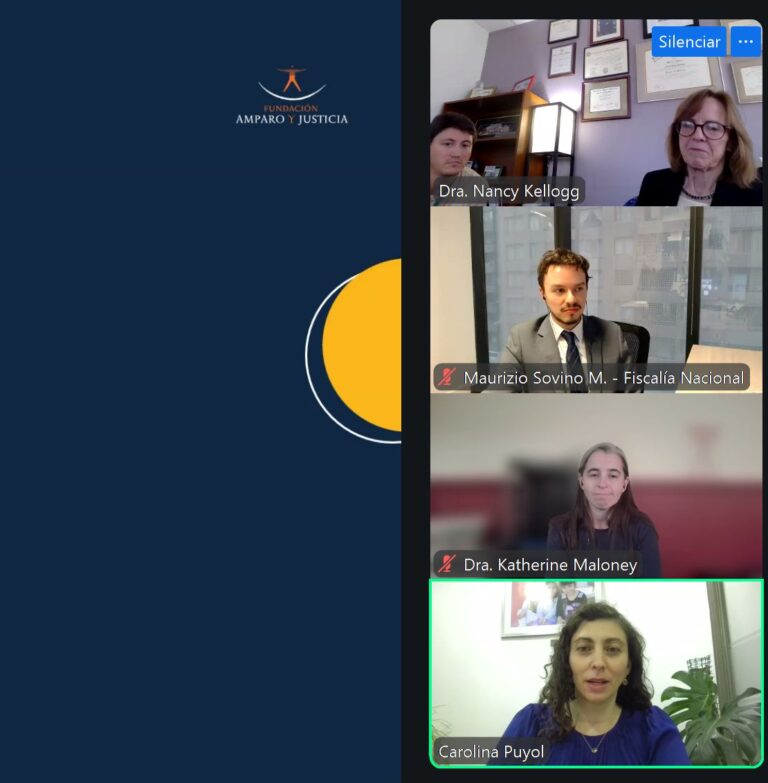
The Forensic Medical Service and Fundación Amparo y Justicia organized a virtual seminar bringing together forensic experts, prosecutors, and justice system professionals from Chile and...
Por Pía Greene, directora ejecutiva de Fundación Amparo y Justicia In less than 24 hours, six people were murdered in the Metropolitan Region. Among them,...
The recent approval of the law to strengthen the Public Prosecutor’s Office marks a milestone for the criminal justice system, 25 years after its establishment...
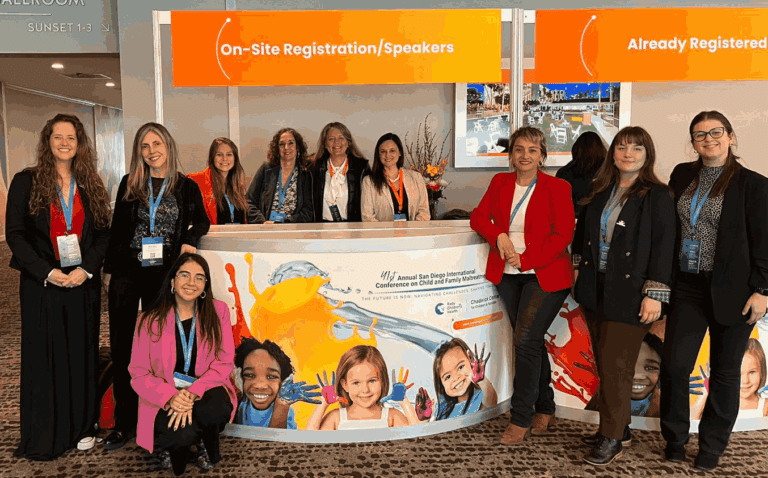
Members of the Foundation’s board and team attended a course on child homicide investigations and the 41st San Diego International Conference on Child and Family...
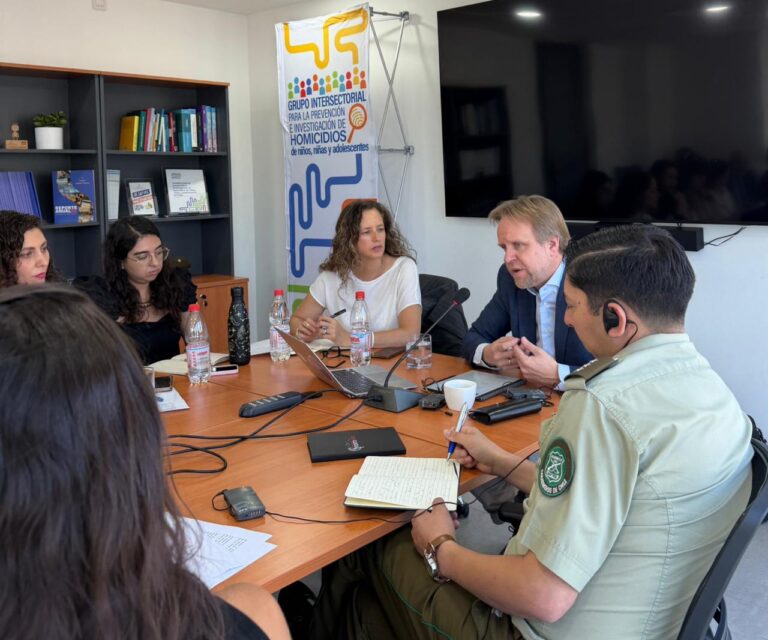
Members of the Intersectoral Group for the Prevention and Investigation of Homicides of Children and Adolescents held a working meeting with Ton Liefaard, an academic...
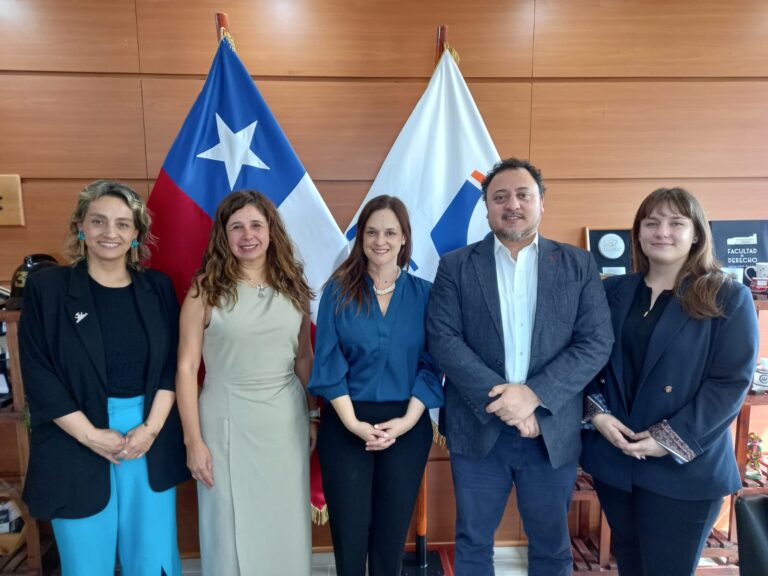
With the aim of strengthening interinstitutional work and advancing a more effective response to serious crimes affecting children and adolescents, representatives of Fundación Amparo y...