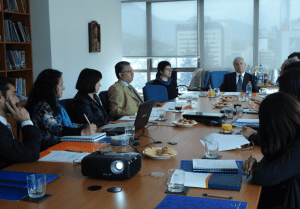
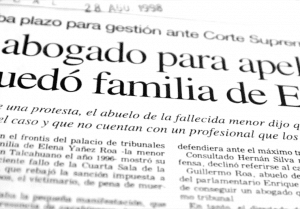
27 years ago, Andrónico Luksic Craig, moved and shocked by the State’s abandonment and the pain of the family of a five-year-old girl who was raped and murdered in Talcahuano, decided to bring together a team of professionals to represents them legally and to provide psychosocial support.
That same year, in 1998, the same support was given to three other families from Coelemu, Hualañé and Valparaíso who had lost their children to crimes with the same characteristics.
And so, the Fundación Amparo y Justicia was created that year.
We work to guarantee access to justice and contribute to the recovery of families who have lost a child due to sexual aggression and homicide or femicide.
Our Vision
Our aim is to be a reference in the promotion and protection of the rights of child victims of sexual crimes, as well as the rights of their families.
Our Mission
Our purpose is to provide specialized psychological, social and legal support to families who have lost a child to sexual assault in the context of homicide, both during the criminal proceedings and the stage of execution and enforcement of the sentence.
We seek to make an impact on public policy regarding sexual crimes against children and to contribute to the prevention of secondary victimization that they and their families experience.
Thanks to our direct work with families, over 27 years’ worth of experience and the representation of cases of sexual assault and homicide or femicide of children, we have been able to make an impact on public policy through:
The design and execution of specialized training programs
The execution of campaigns for raising awareness and spreading information about rights
Development of evaluations, analyses and other studies
Advising legislators and decision takers
Milestones
2025
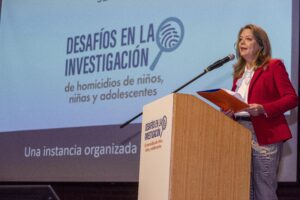
Through the Intersectoral Group for the Prevention and Investigation of Homicides of Children and Adolescents, the Foundation led a national assessment to advance concrete solutions to this issue. This collaborative work aims to improve the State’s response and prevent these types of crimes.
2024
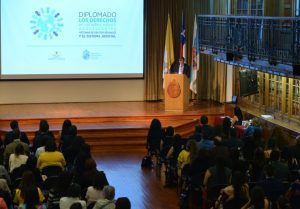
The Foundation launched a new line of work aimed at strengthening the early detection and investigation of homicides and suspicious deaths of children and adolescents. That year, the diploma program developed with the Catholic University concluded after 10 years, 14 editions, and over 800 trained professionals.
2023
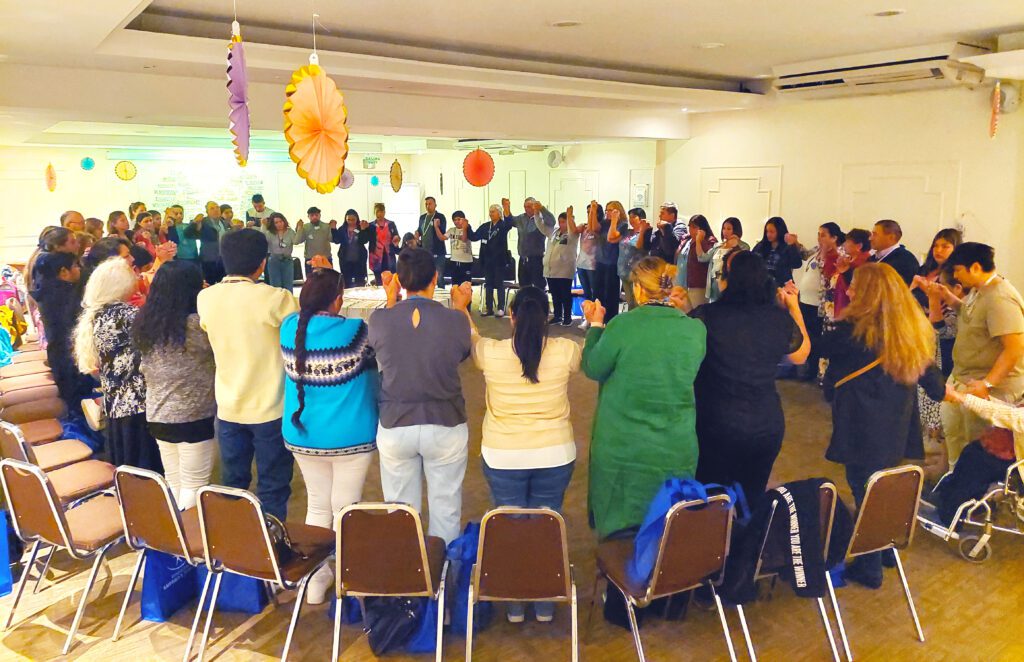
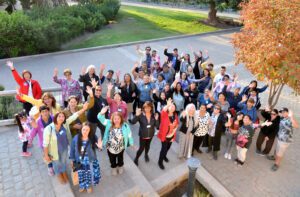
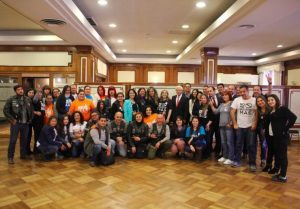
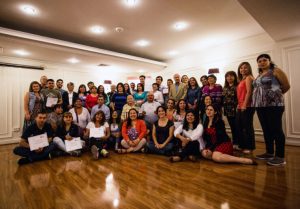
One of the year’s milestones was the Family Meeting. In addition, amendments to the Parole Law were approved, and the project “Do you know what to do if you learn about a sexual crime against children and adolescents?” was launched to inform and guide caregivers and communities.
2022
The third and final stage of implementing the Videorecorded Interview Law began. The Foundation continued supporting public institutions and launched the Interviewer’s Handbook and the Intermediary’s Handbook, key tools for strengthening specialized work in investigations involving child victims.
2021
The Foundation supported families who faced the loss of their children and continued providing comprehensive assistance throughout their judicial processes. Under Law 21.057, it designed and implemented an Online Training Course for Interviewers, using the Moodle platform and evaluating participants’ learning outcomes.
2020
The Foundation continued promoting the prevention of secondary victimization through contributions to public policy, technical information, and training for child-protection institutions. It also continued supporting families affected by serious crimes, providing multidisciplinary assistance and specialized guidance in their search for justice and reparation.
2019
The Foundation represented the mother of Ámbar, a one-year-seven-month-old girl who was raped and killed in Los Andes. After 16 months of investigation and a month-long trial, the perpetrator received a sentence of qualified life imprisonment. That year, the first stage of implementation of Law 21.057 began.
2018
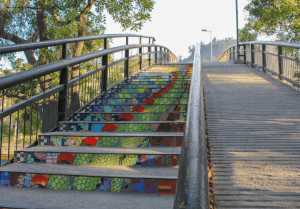
In January, the Law on Video-Recorded Interviews was enacted. To mark this milestone, Amparo y Justicia inaugurated the “Protection and Hope” Children’s Stairway in Providencia, an urban installation symbolizing the importance of caring for and protecting children throughout Chile.
2017
The Foundation began working with criminal justice institutions to train specialized interviewers and instructors, developing the first official courses. In October, after four years of legislative review, the Law on Video-Recorded Interviews was approved—a key milestone for the protection of children and adolescents.
2015
The fourth meeting with families affected by serious crimes was held, continuing the Foundation’s ongoing support. That year, the first edition of the book Video-Recorded Investigative Interview was published to consolidate good practices and support the specialized training of criminal justice professionals.
2014
The Executive Branch submitted the Bill on Video-Recorded Interviews to Congress. Together with the Pontifical Catholic University of Chile, the Foundation launched the first edition of the diploma program “The Rights of Child and Adolescent Victims of Sexual Crimes and the Judicial System”.
2013
To support the future implementation of the video-recorded interview system, the Foundation launched the campaign “Don’t ask me again”. The initiative sought to raise awareness of the need to avoid repeated statements and protect children and adolescents from secondary victimization during investigative processes.
2012
Following the work of technical committees and a review of international experiences, the Foundation submitted a draft bill to the Executive to create a system of video-recorded interviews. The proposal aimed to protect children and adolescents during criminal investigations.
2011
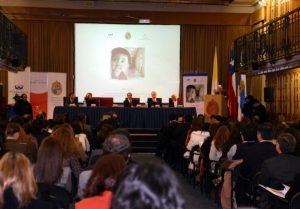
Amparo y Justicia and the Ministry of the Interior and Public Security signed an agreement to strengthen support for families affected by cases of rape resulting in the death of a child, ensuring timely and specialized assistance. That year, an intersectoral working group was convened, and the third international seminar was held.
2008
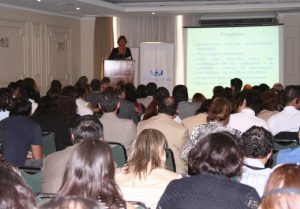
A second seminar on sexual offenses was held, bringing together officials from various institutions in the criminal justice system. In addition, the first inter-institutional working group was formed to analyze how to prevent secondary victimization of children and adolescents and strengthen coordination among public actors.
2007
After taking cases of sexual offenses without fatal outcomes, the Foundation added the reduction of secondary victimization to its mission. That year, it held the first international seminar on sexual offenses against children and adolescents, promoting debate and specialized training within the justice system.
2001
Amparo y Justicia took on the Alto Hospicio case, providing legal representation to the families of the teenagers who were raped and murdered by a serial offender. It also offered psychosocial support and guidance throughout the judicial process, strengthening its direct work with the families.
1998
Amparo y Justicia was founded after the lack of protection faced by the family of a five-year-old girl who was raped and killed in Talcahuano. That same year, three other cases in Coelemu, Valparaíso, and Hualañé shocked the country and led to the creation of the Foundation.
Us
Alejandro Espinoza Bustos
President
Ena Von Baer Jahn
Executive Vice President
Patricio Walker Prieto
Director
Rodrigo Terré Fontbona
Treasurer
María Elena Santibañez Torres
Secretary
Pía Greene
Executive Director
María José Bowen
Legal and Intervention Director
Sucy Muñoz
Head of Psychosocial Intervention
María Inés Ovalle
Social Worker
Federica Pinter
Psychologist
Bernardita Crisóstomo
Public Policy and Advocacy Director
Carolina Puyol
Head of Training y Partnership
Carolina Pavez
Sociologist – Researcher
Carolina Sobarzo
Sociologist – Researcher
Yohanna Douglas
Coordinator of Courses on Sexual and Violent Crimes
Maísa Valdivia
Psychologist
Paula Mujica
Psychologist
Isidora Sotomayor
Communications Coordinator
Patricia Le-Bert
Director of Communications
Paz Ibarra
Production Manager
Rocío Ñancupil
Digital Communications Lead
Roberto Molina
Director of Administration and Institutional Management
Psychologist with a degree from the Universidad de Chile, adjunct professor in the Department of Psychiatry and Mental Health, School of Medicine at the Universidad de Chile.
Professor, PhD in Criminology from the University of Montreal (Canada) and Associate Director of Research at the School of Criminology at Simon Fraser University (Canada).
Journalist with a degree from Universidad Finis Terrae and a Master’s in Public Policy from Universidad Adolfo Ibáñez. Founding partner of the marketing and communications agency, Simplicity.
Psychiatrist and Psychotherapist, President of the Chilean Association of Traumatic Stress. Adjunct professor in the Department of Psychiatry and Mental Health, School of Medicine at the Universidad de Chile.
PhD in Psychology. Emeritus Professor at the University of Cambridge. Editor of the Journal of Psychology, Public Policy and Law. Coauthor of the NICHD Protocol.
PhD in Clinical and Health Psychology at the University of Barcelona. Full Professor of Victimology at the University of Barcelona who teaches undergraduate Criminology courses.
Expert accredited intermediary in communication. Over 20 years of experience as a speech therapist, working with children and teens with communication difficulties.
Attorney. Former President of the Board of Fundación Amparo y Justicia.
Para ser usuario de nuestra plataforma deberás enviar una solicitud de ingreso con los datos desplegados a continuación, dicha solicitud será procesada por nuestro equipo quien le enviará la información a su correo.